Small Bedroom Design Ideas That Actually Work in Indian Homes
Ten practical ideas for 10x10 and smaller bedrooms — storage that does not close in on you, layouts that free up floor, and the mistakes that make a small room feel smaller.
Most Indian bedrooms are between 10x10 and 12x11 feet, and they have to hold a double bed, a wardrobe for two people, and often a study table. The room is not the problem — the layout usually is.
1. Push the wardrobe to the wall the door opens against
The wall behind an inward-opening door is dead space. A wardrobe there disappears when you walk in, instead of being the first thing you see. It is the single change that makes the most rooms feel larger.
2. Go floor to ceiling, always
A 7-foot wardrobe with a gap above it wastes 2 feet of storage and collects dust. Full-height with a loft costs about 12–15% more and gives roughly 25% more storage. In small rooms it also draws the eye up, which helps.
3. Storage beds are worth the hinges
A hydraulic storage bed holds an entire season of quilts and suitcases. In a 10x10 room that is often the difference between needing a second wardrobe and not.
Rule of thumb: in rooms under 120 sq ft, every large piece of furniture should be doing two jobs.
4. Skip the bulky bedside tables
Wall-mounted floating side tables or a slim ledge running behind the bed frees up floor area and makes cleaning easier. Add a socket and a USB point in the same run.
5. Keep the false ceiling to a border
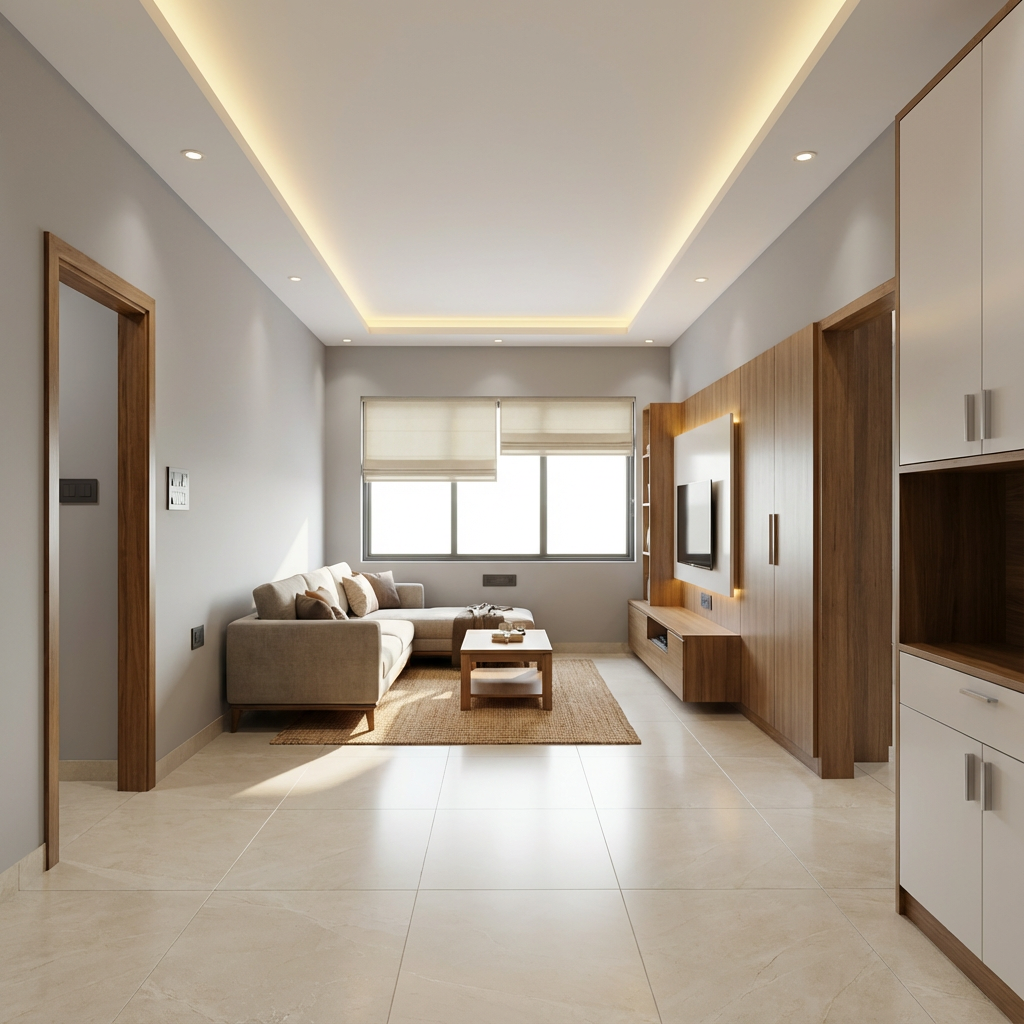
A full false ceiling in a small room lowers it visibly. A 6–9 inch peripheral cove with warm LED light gives you the soft lighting without eating head height.
6. Use one large mirror, not a gallery of small ones
A single mirror on the wardrobe shutter facing the window doubles the perceived light. Multiple small decorative mirrors just add visual clutter.
7. Light in layers, not from one central point
One tube light in the middle of the ceiling flattens the room. Use three sources: cove or ceiling light for ambient, bedside reading lights, and a warm accent behind the headboard.
8. Pick colour by wall, not by room
Painting all four walls a dark colour shrinks a small room. One deep accent wall behind the headboard, with the remaining three in a light warm neutral, adds depth without closing in.
9. Curtains from ceiling to floor
Mounting the rod just above the window makes the wall look shorter. Mount at the ceiling line and let the fabric fall to the floor — the whole wall reads taller.
10. Leave a walking lane
You need about 60 cm on at least one long side of the bed and in front of the wardrobe. If the layout does not allow it, the room needs a smaller bed, not cleverer furniture.
Mistakes that quietly shrink a room
- A bed pushed into a corner so one side is unusable
- Deep wardrobes (more than 60 cm) that steal walking space
- Heavy dark curtains that block the only window
- Too many small furniture pieces instead of a few well-planned ones
- Wall art hung too low — hang at eye level, not bed level
FAQ
What is the best layout for a 10x10 bedroom?
Place the bed centred on the wall opposite the door, the wardrobe on the wall the door opens against, and keep at least 60 cm of clearance on one long side of the bed. Avoid corner-placed beds in rooms this size.
How much does a small bedroom interior cost in India?
A compact bedroom with a full-height wardrobe, a storage bed, cove lighting and paint typically costs Rs 1.2–2.5 lakh in 2026, depending on material and hardware grade.
Do light colours really make a room look bigger?
Yes — light, warm neutrals reflect more light and soften the boundary between wall and ceiling. The effect is strongest when the ceiling is lighter than the walls.
Is a queen bed too big for a 10x10 room?
A queen (60x78 inches) fits a 10x10 room if the wardrobe is on the door-side wall and you keep one clear walking lane. If you also need a study table, consider a smaller bed.
See your bedroom redesigned, free
Instead of imagining it, upload a photo of your bedroom. Innterio generates a 3D design of the same room with new furniture and lighting, plus an indicative budget — in about a minute, at no cost.